

FIDE Moscow GP: Quarter-final begins with four draws
The second round of the Moscow Grand Prix began with four draws on Monday, though there were several pitched battles. Since the Grand Prix is using a knockout format, all competitors will face each other on Tuesday in the second half of their mini-matches. If those games end in draws, then the players will proceed to faster tie-breaker games on Wednesday to decide who advances to the semifinals of the tournament. One feature of the quarterfinals of the Moscow Grand Prix is that there are four Russian players facing two American players, one from China and one from Poland. It has the same format, inadvertently, as the Russia vs. the World match in 2002 (and before that, the U.S.S.R. vs. the World matches in 1970 and 1984). Photo: World Chess
Second Round of Moscow Grand Prix Begins Peacefully
All the games on Monday had interesting moments. Perhaps the most unusual was between Hikaru Nakamura, one of the two Americans, and Daniil Dubov.
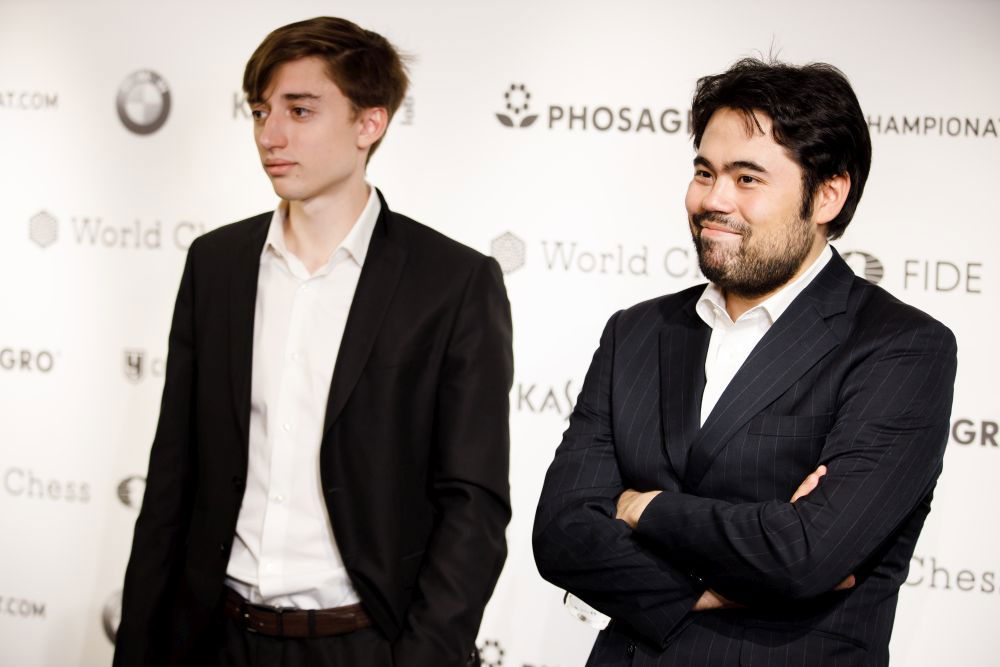
Dubov, who is known to be very well prepared, had Black and blitzed out his opening moves on the Black side of a Symmetrical English, barely using any time on his clock by Move 20. The position on the board at that point was remarkable: Dubov had a pawn on d3 and his entire pawn structure was broken.
Nakamura - Dubov, Round 2.1
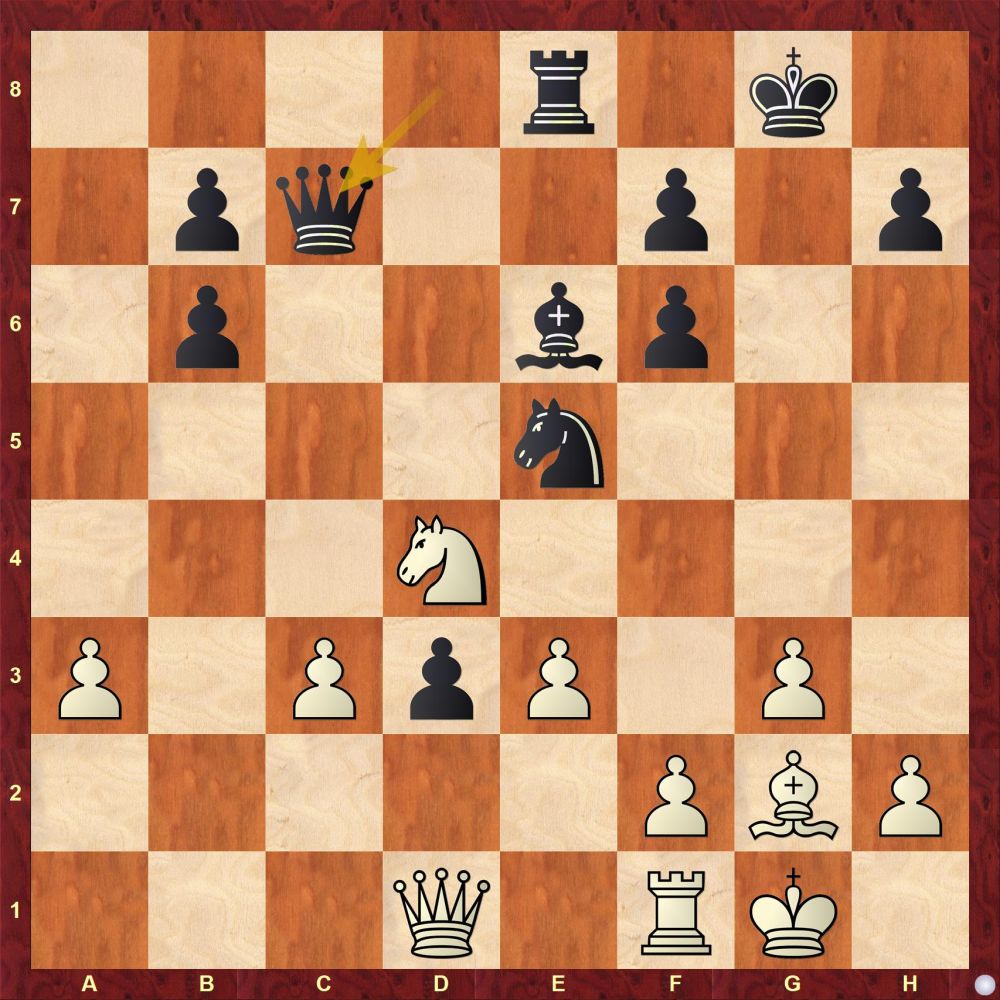
In some ways, Black seemed to have violated many of the major principles of chess opening theory. But he had the initiative and that pawn on d3 was problematic for White.
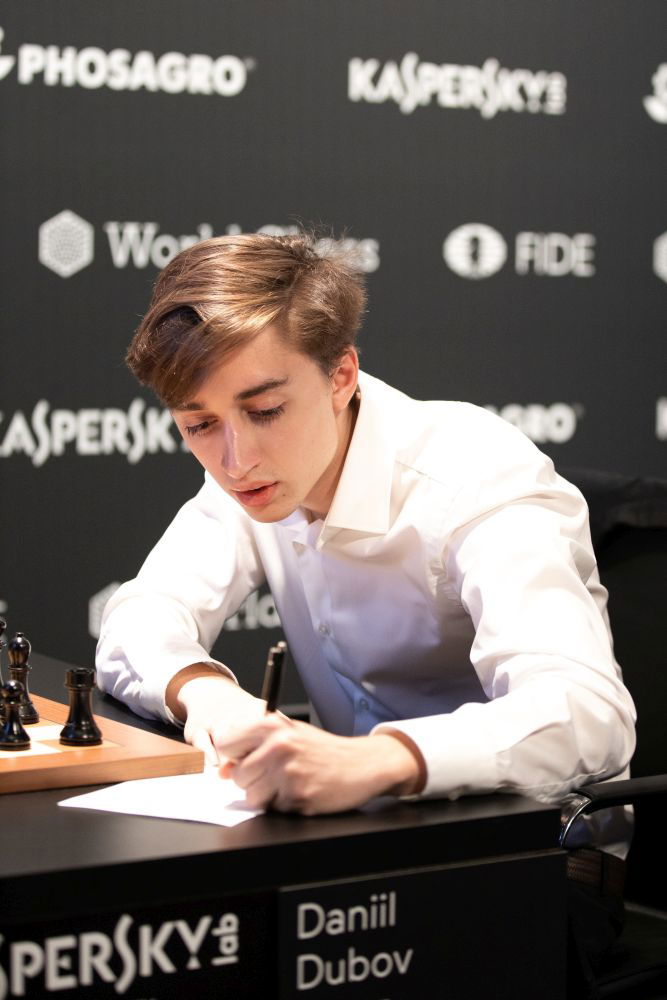
The fact that Nakamura had consumed nearly an hour more on his clock than Dubov also had to be troubling for him. Afterward, Nakamura said of the opening, “I knew that Daniil would surprise me, but I did not quite expect him to play 20 moves or something without really thinking at all.”
Nakamura finally managed to surround and win the pawn on d3, but only by allowing Dubov’s queen to infiltrate on the queenside. The players agreed to a draw soon after in a position in which Black’s dynamically placed pieces offered compensation for his ruined pawn structure.
The first game to finish was between Peter Svidler and Radoslaw Wojtaszek of Poland.
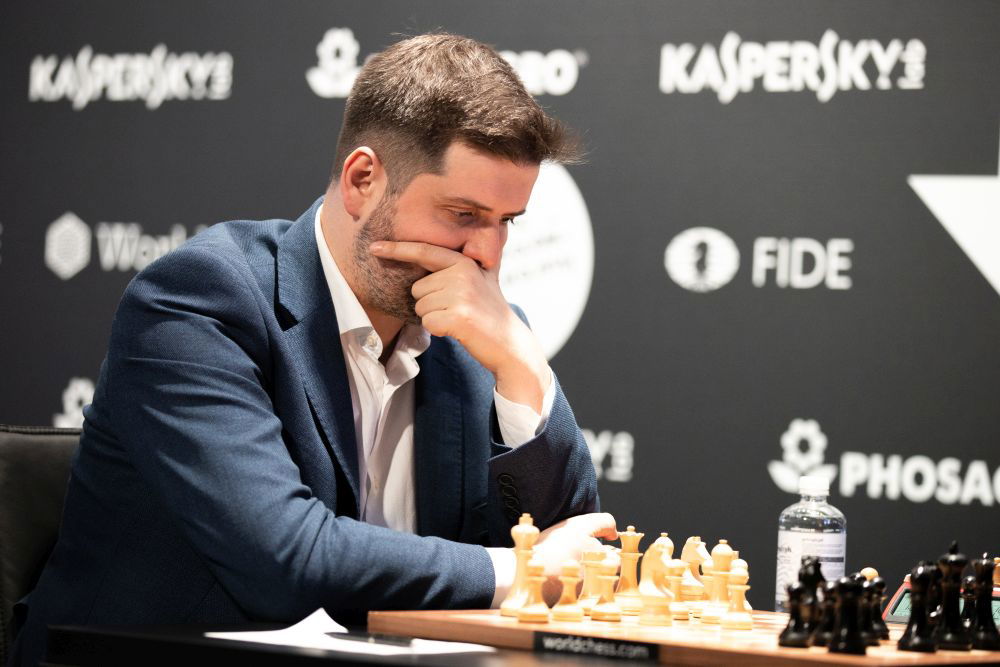
The opening was a Sicilian Defense, but Svidler deviated early with the unusual retreat 5 Bd3. He soon had a good position, however, as he slowly expanded in the center, seizing space.
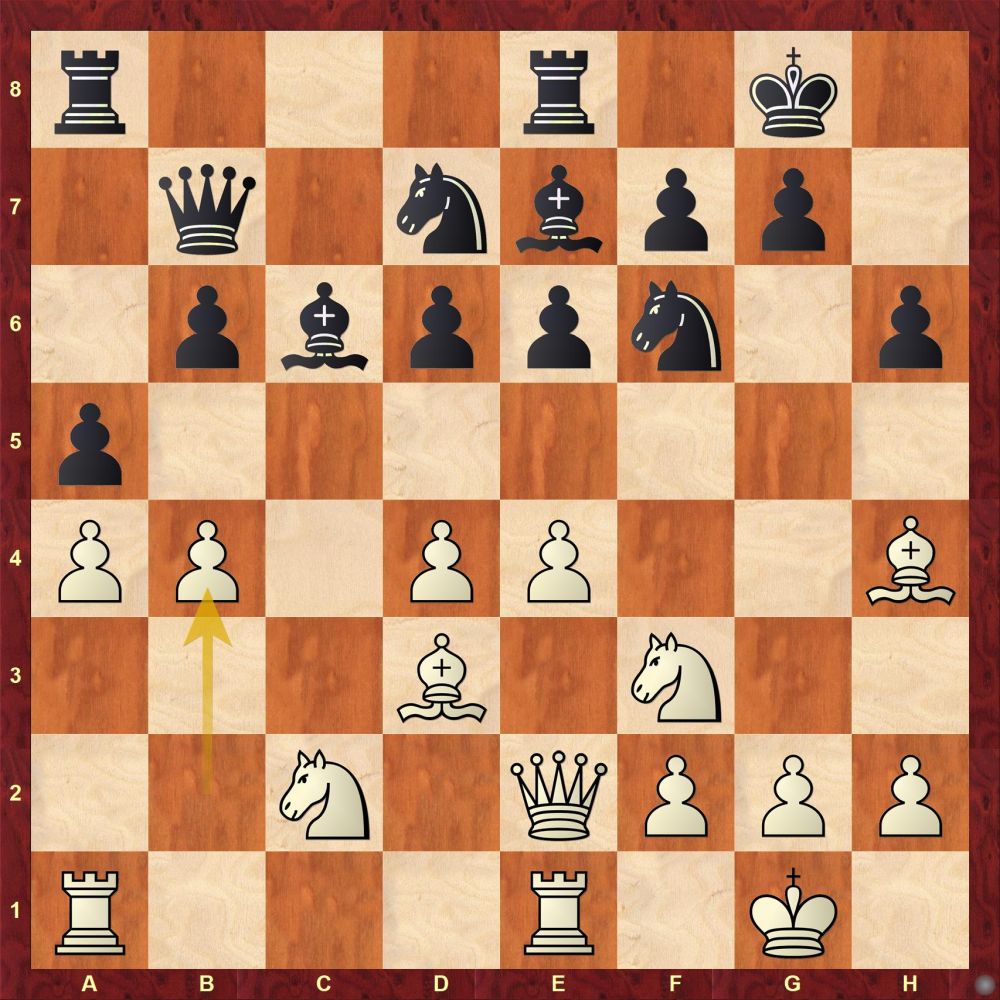
Svidler - Wojtaszek, Round 2.1
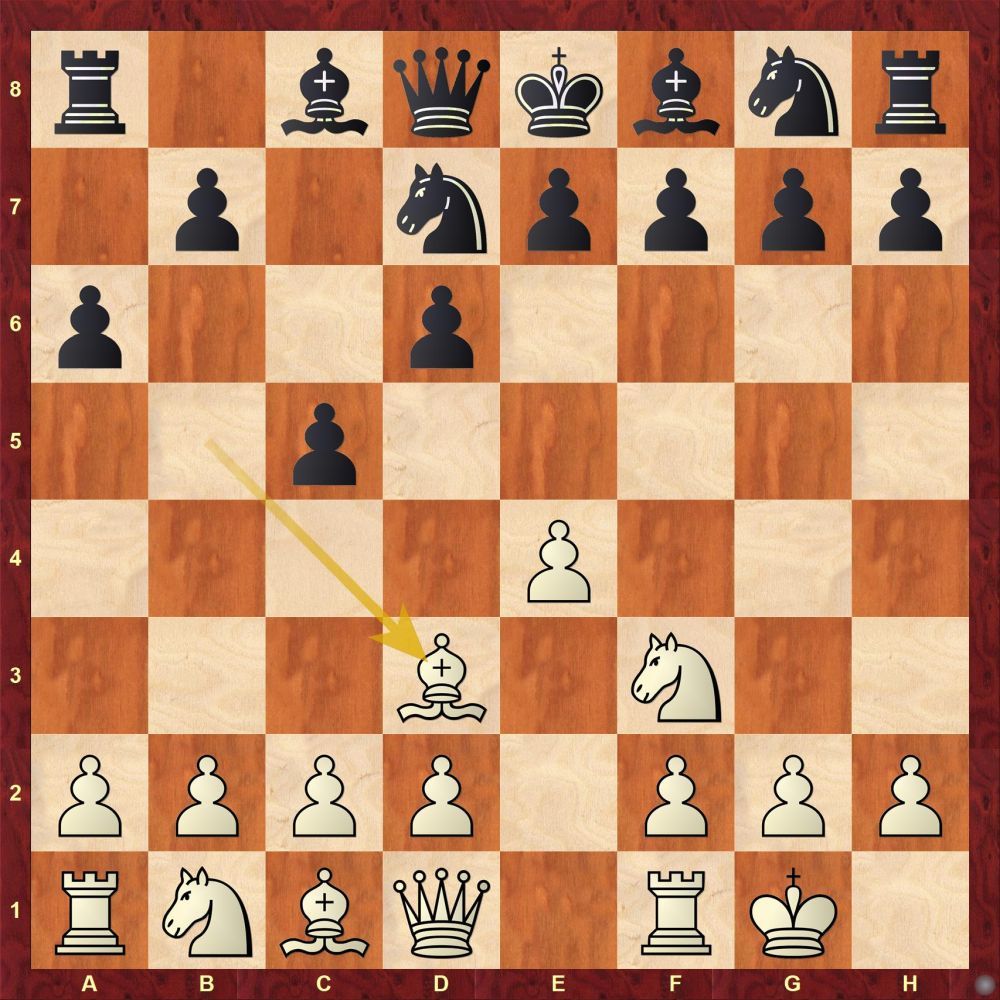
On Move 18, Svidler erred with 18 b4. Wojtaszek could have played 18… ab4 and after 19 Nb4 Be4! 20 Be4 d5. But Wojtaszek missed his chance and instead played 18… Qa7. The players agreed to a draw two moves later.
In an interview afterward, Svidler said he offered a draw because he did not understand what sort of plan he should have in the position, despite having extra space. He also said that he had a headache, which contributed to his decision.
Alexander Grischuk, who is known for chronically being in time pressure, played the opening quickly against Wesley So, the other American in the field.
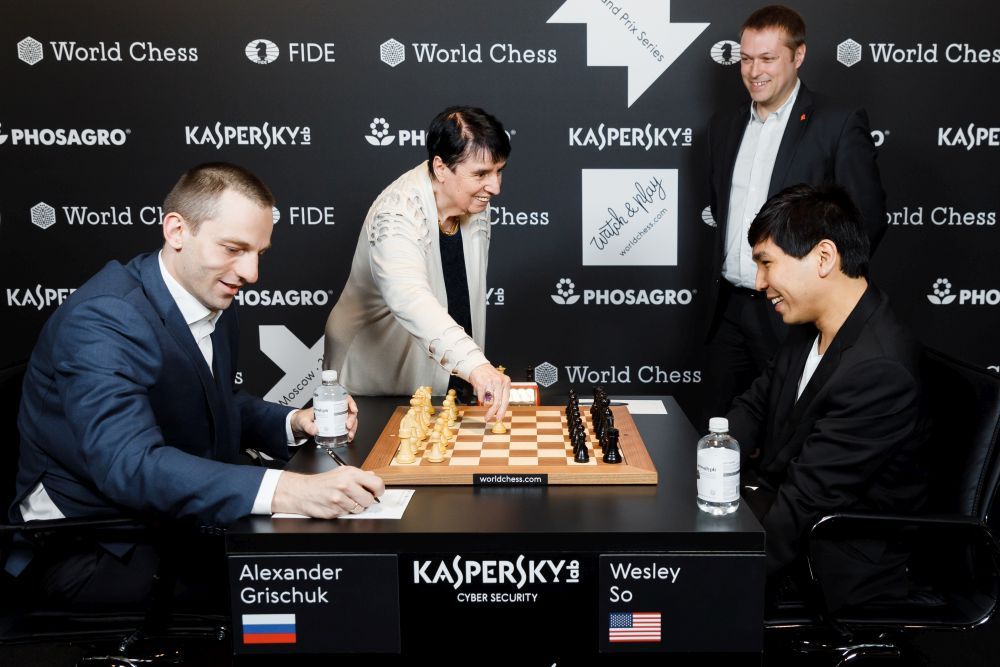
On Move 14, given a choice, he quickly played a surprising recapture – 14 ed4, instead of Qd4, voluntarily accepting an isolated queen pawn.
Grischuk - So, Round 2.1
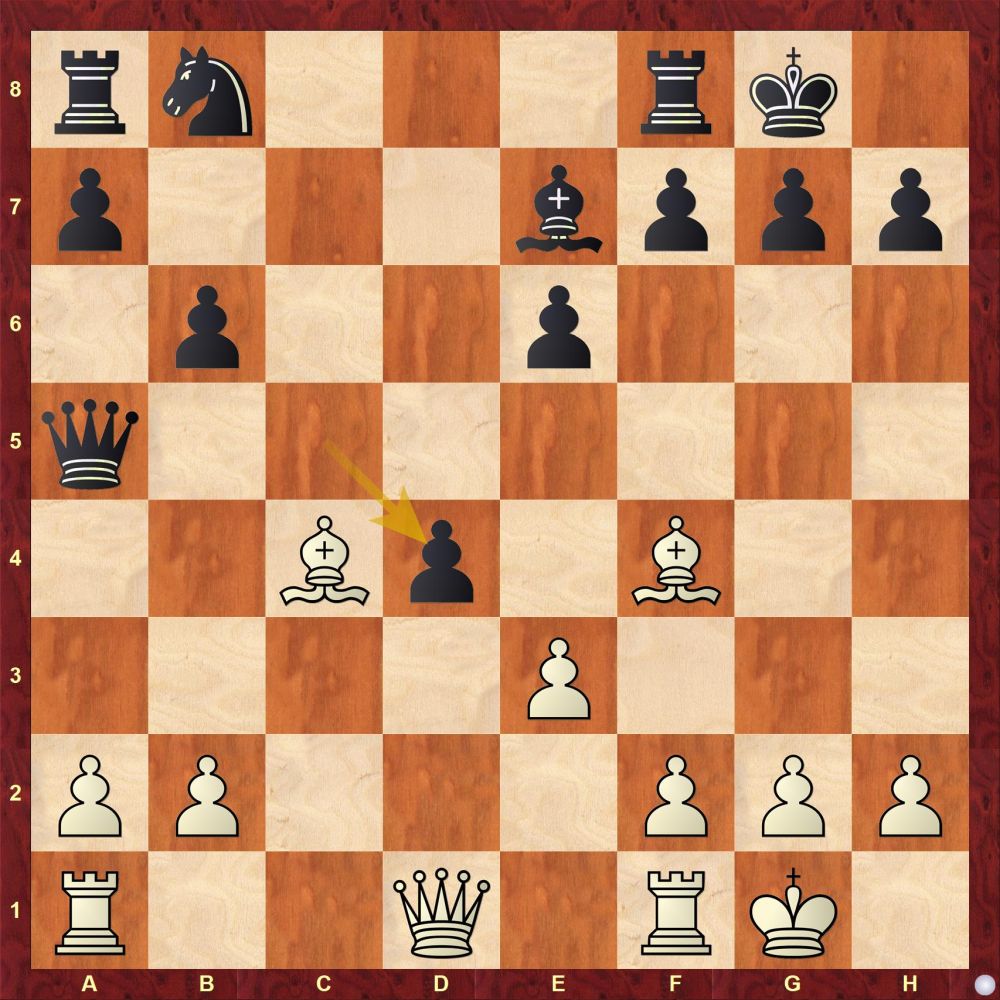
The speed of his play indicated that it was preparation. So played carefully, but Grischuk managed to gain an endgame with the bishop pair, which is often dangerous. Nevertheless, So navigated the complications successfully, even winning a pawn, but a draw seemed to be the most likely outcome.
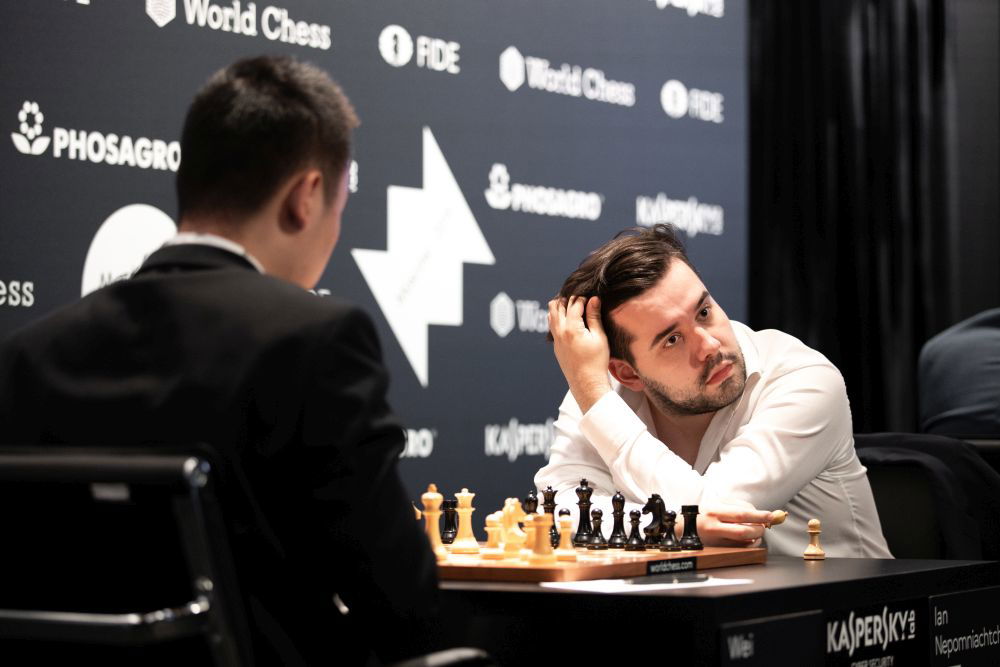
In the final game between Wei Yi of China and Ian Nepomniachtchi, the opening was the Najdorf Variation of the Sicilian Defense. Nepomniachtchi is known to be an expert in this opening, but he had to be careful as Wei gained a slight edge because of a nagging space advantage. Wei was unable to make much of his edge, however, and the players agreed to a draw because of repetition on Move 31.
The matches resume Tuesday at 3 p.m. local time, 5.30 p.m. IST. The broadcast can be viewed free and live at worldchess.com.
Live games begin at 5.30 p.m. IST
The principal sponsors of the series are PhosAgro, a giant Russian fertilizer company, and Kaspersky Lab, a worldwide leader in data security. The series is being organized and broadcast by Worldchess on its Web site under the auspices of FIDE.
About the author:

Dylan Loeb McClain is an author for the World Chess website. Formerly, he was a staff editor and chess columnist for The New York Times.
Related News

फीडे महिला ग्रां प्री - अब हरिका के पास है अंतिम मौका

What happens when a super GM thinks for 35 minutes?

मोनाको ग्रां प्री:हम्पी उपविजेता,कोस्टिनीयुक को खिताब

मोनाको ग्रां प्री - हम्पी के पास आखिरी मौका !

मोनाको ग्रां प्री - हम्पी - हरिका के बीच मुक़ाबला ड्रॉ
मोनाको ग्रां प्री - हरिका की लगातार दूसरी जीत

मोनाको ग्रां प्री - जीत के साथ हरिका की वापसी

मोनाको ग्रां प्री - हम्पी का अच्छा बचाव ,बढ़त बरकरार

मोनाको ग्रां प्री - कोनेरु हम्पी विश्व नंबर 2 बनने के करीब

मोनाको ग्रां प्री - हारी बाजी जीतकर की हम्पी नें शुरुआत

मोनको फीडे ग्रां प्री - हम्पी और हरिका पर होगी नजर

विश्व शतरंज में हम्पी की वापसी - जीता फीडे ग्रांड प्रिक्स खिताब

Humpy wins Skolkovo FIDE Women's Grand Prix 2019

कोनेरु हम्पी फीडे वुमेन ग्रांड प्रिक्स खिताब के करीब
Humpy takes sole lead in Skolkovo FIDE Women's Grand Prix

Humpy is now World no.3

Humpy and Harika make a solid start at Skolkovo FIDE Women's Grand Prix

फीडे वुमेन ग्रांड प्रिक्स 2019 - हम्पी -हरिका नें खेला ड्रॉ

रिगा फीडे ग्रैंडप्रिक्स - मेक्सिम लाग्रेव पहुंचे सेमीफाइनल

फीडे ग्रैंडप्रिक्स R1:G2 - हरिकृष्णा की निगाहें टाईब्रेक पर

Harikrishna survives game one, now has a chance to knockout Wesley So
फीडे ग्रैंडप्रिक्स R1:G1 - हरिकृष्णा का शानदार बचाव !

नेपोमनियची बने मॉस्को ग्रांड प्रिक्स विजेता
Ian Nepomniachtchi wins Moscow GP

Playoff Will Decide Moscow Grand Prix

Moscow GP Finals: Grischuk-Nepo Game 1 ends up in a draw

Nepomniachtchi is the Second Finalist at Moscow GP

मॉस्को फीडे ग्रांड प्रिक्स - नाकामुरा हुए नॉक आउट

FIDE Moscow GP: Grischuk is the first to advance to the finals

मॉस्को फीडे ग्रांड प्रिक्स - शुरू हुई सेमीफ़ाइनल की जंग

FIDE Moscow GP: Moscow Semi-finals begin with two nervous, tense draws

FIDE Moscow GP: Nakamura, Grischuk and Nepo join Wojtaszek in the semi-finals

FIDE Moscow GP: Wojtaszek is the first Semi-finalist

मॉस्को फीडे ग्रांड प्रिक्स - दिग्गज हुए बाहर !

FIDE Moscow GP Round 1 Playoff: Nakamura and So advance to the Quarter-finals

FIDE Moscow GP: Giri, Mamedyarov, Aronian and Karjakin get eliminated

Moscow Grand Prix Round 1.1: The Poles have a great day!

Harikrishna is the only Indian in the FIDE Grand Prix series 2019

फीडे ग्रां प्री में पेंटाला हरिकृष्णा होंगे अकेले भारतीय